Offer Christmas & New Year Deals · Save A Fortune This Season. See Our Latest Hot Tub Deals
South Of England » East Sussex

Juniper Country Park - Fun Days Out

  • Sleeps up to 4
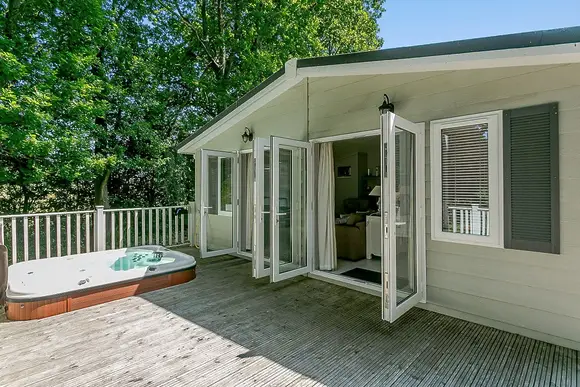
  • Hot Tub
Signature - Juniper Country Park, WestfieldPhotos & lodge info

Top Days Out Near Juniper Country Park

The best-known attractions within an easy drive of Juniper Country Park, with real driving times.

Historic abbey and battlefield 11 min drive · 6 miles

Battle Abbey

Sat nav: TN33 0AD

Walk the actual field of the 1066 Battle of Hastings and explore the abbey ruins William the Conqueror founded.

  • Families
  • Couples
  • 2-3 hours
Read more

Battle Abbey, run by English Heritage as 1066 Battle of Hastings, Abbey and Battlefield, is the site where William the Conqueror's Normans met King Harold's English army. The abbey was founded by William soon after the conquest, said to be on the spot where Harold died. Start at the visitor centre, where interactive displays and a film tell the story of the battle, then pick up the audio tour and walk the battlefield, looking out for the dramatic wooden figures.

Afterwards you can explore the abbey ruins and climb to the gatehouse rooftop for panoramic views. An exhibition inside the gatehouse covers the abbey's history, and there's a walled garden and an ice house to investigate. There's a big café near the gatehouse and a children's playground inspired by the site's history, so it works well for families, and anyone with an interest in English history.

Tip: Head to the visitor centre first to get the story of the battle, then take the audio tour round the battlefield.
Moated castle 15 min drive · 8.5 miles

Bodiam Castle

Sat nav: TN32 5UA

A 14th-century moated castle in East Sussex with spiral staircases, battlements and a portcullis to explore.

  • Families
  • Dogs in the grounds
Read more

Bodiam Castle is a 14th-century moated castle near Robertsbridge in East Sussex. Sir Edward Dalyngrigge built it in 1385 with the permission of Richard II, ostensibly to defend the area against French invasion during the Hundred Years' War. It has no keep. Instead, the chambers were built around the outer walls and inner courts, with towers at the corners and the entrance, topped by battlements.

Inside, the interior is ruined, but you can still climb the spiral staircases, walk along the battlements and pass under the portcullis. The castle sits in an artificial watery landscape, and the grounds are open to explore. There's a shop, a tea-room overlooking the river and a second-hand bookshop by the river. The National Trust runs family trails and other events through the year.

Tip: You don't need to book in advance, but the car park uses the JustPark app, so download it and set up an account before you arrive. The towers are reached by steep spiral staircases.

Local museum 12 min drive · 4.8 miles

Hastings Museum and Art Gallery

Sat nav: TN34 1ET

A museum in a red-brick former house, with dinosaurs, local wildlife dioramas and a Indian palace hall.

  • Rainy days
Read more

Hastings Museum & Art Gallery is housed in John's Place, a red-brick building designed as a private house, with a crenelated roofline, columned loggia and studded oak doors. Inside, the early local history gallery tells the story of the area from prehistory to the Saxons. Local wildlife is shown in dioramas of different habitats, and there is a dinosaur gallery too.

The Durbar Hall was built for the Colonial and Indian Exhibition in London and later given to Hastings by the Brassey family. Its upper level is now one of the world cultures galleries. Elsewhere you'll find a Native North American collection, which includes the story of Hastings-born conservationist Archibald Belaney, who took the name Grey Owl. Fine art and local and social history collections complete the picture.

Seaside pier 11 min drive · 4.5 miles

Hastings Pier

Sat nav: TN34 1JU

A Victorian pleasure pier that rose again after a devastating fire and won architecture's Stirling Prize.

  • Couples
Read more

Hastings Pier is a public pleasure pier designed by Eugenius Birch, who also designed the piers at Eastbourne and the West Pier in Brighton. It opened in 1872 and had its prime in the 1930s, when the pavilion buildings were given an art deco makeover. In the 1960s and 1970s its pavilion hosted acts including The Rolling Stones, The Who, Jimi Hendrix and Pink Floyd, and Syd Barrett played his last show with the band here.

The pier's story is a dramatic one. A fire destroyed 95% of it in 2010, and the Hastings Pier Charity oversaw a rebuild, reopening it in 2016. The redeveloped pier won the 2017 Stirling Prize for architecture. It was later sold to a private buyer and reopened again in 2019. It will appeal to anyone who enjoys seaside heritage, music history or modern architecture.

Arts centre 15 min drive · 7.8 miles

De La Warr Pavilion

Sat nav: TN40 1DP

A Grade I listed Modernist seafront landmark in Bexhill-on-Sea with free galleries and a café bar.

  • Families
  • Rainy days
  • 1-2 hours
Read more

The De La Warr Pavilion is a Grade I listed building on the seafront at Bexhill-on-Sea. Designed by Erich Mendelsohn and Serge Chermayeff and built in 1935, Historic England describes it as the UK's first public building in the Modernist style. Since its restoration in 2005 it has been a contemporary arts centre, with one of the largest galleries on the south coast of England.

Admission to the building and galleries is free, with no need to book for general entry. There is a shop selling gifts and work by local makers, and an independent record store in the foyer. The Café Bar & Kitchen has sea views, a children's menu and plenty of vegan and vegetarian options. The pavilion also stages live events and film screenings, including family screenings, so check the programme before you go.

Tip: The car park outside is paid, with metered parking too, so allow for that if you're driving.

Roman fort and castle 24 min drive · 14.9 miles

Pevensey Castle

Sat nav: BN24 5LG

A huge Roman fort where William the Conqueror landed in 1066, with Norman and Second World War history.

  • Families
Read more

Pevensey Castle began as a Roman fort around AD 290 and is the largest of the Saxon Shore forts. Its massive walls, more than 500 metres long, still stand almost to their full height. In 1066 William the Conqueror landed here to begin his invasion of England, and the Normans built a stone keep and fortress inside the Roman defences.

You can walk around the walls and towers, then see the later chapters of the story. Machine-gun posts were built into the walls during the Second World War and can still be seen today. Displays cover sieges, royal prisoners and how soldiers lived alongside local people, and there is a recreated 1940 commander's office. Children can try the Pevensey Castle Code, look into a dungeon and explore a medieval basement room.

Tip: Book advance tickets online to save money. Battle Abbey, the 1066 battlefield, is about 9 miles away.

Coastal fort 16 min drive · 9.1 miles

Camber Castle

Sat nav: TN36 4AZ

A Henry VIII artillery fort reached on a one-mile countryside walk from Rye.

  • Dogs welcome
Read more

Camber Castle is an unusually unaltered artillery fort, built by Henry VIII to guard the port of Rye. It sits between Rye and Winchelsea, and its concentric design has a central keep surrounded by round bastions. The coastline has since receded, leaving the fort well inland. J. M. W. Turner once painted it, and it is a Grade I listed building.

There is no vehicular access, so the visit is a one-mile walk on footpaths from Rye, with the outside of the castle to explore. You can stretch it into a circular walk on the footpaths of Rye Harbour Nature Reserve, taking in a martello tower, WWII pillboxes and old and new sea defences. Birds can be watched from hides along the way. It suits history fans and walkers who like a bit of wildlife on the side.

Tip: The nearest car park is on Winchelsea Road in Rye, about a mile from the castle, so wear walking shoes.

Castle ruin 12 min drive · 5.3 miles

Hastings Castle

Sat nav: TN34 3RG

Norman castle ruins on the cliffs above Hastings, built by William of Normandy in 1066.

Read more

Hastings Castle is a ruined keep and bailey castle on West Hill, on the cliffs above the town, 60 to 70 metres above sea level. William of Normandy had it built soon after landing in England in 1066, first in wood and later in stone. Large parts have fallen into the sea over the years, and the original keep is no longer visible.

On site you can see the remains of St Mary's Chapel, where the floor and parts of the chancel arch and walls were rebuilt from blocks found lying on the ground. There is also a garden on the motte. The castle looks west along the coast towards Pevensey Bay and Beachy Head, and gives a good view of ships in the English Channel. Guided tours are available.

Drive times are typical times by car with no traffic. Check opening times and book tickets on each attraction's own website before you go.