Offer October Half Term Offers · Book Early & Save Big On Hot Tub Breaks
Bodiam, East Sussex

2-Bedroom Hot Tub Lodge in Bodiam - Fun Days Out

  • 4.5 Rating
  • Sleeps up to 4
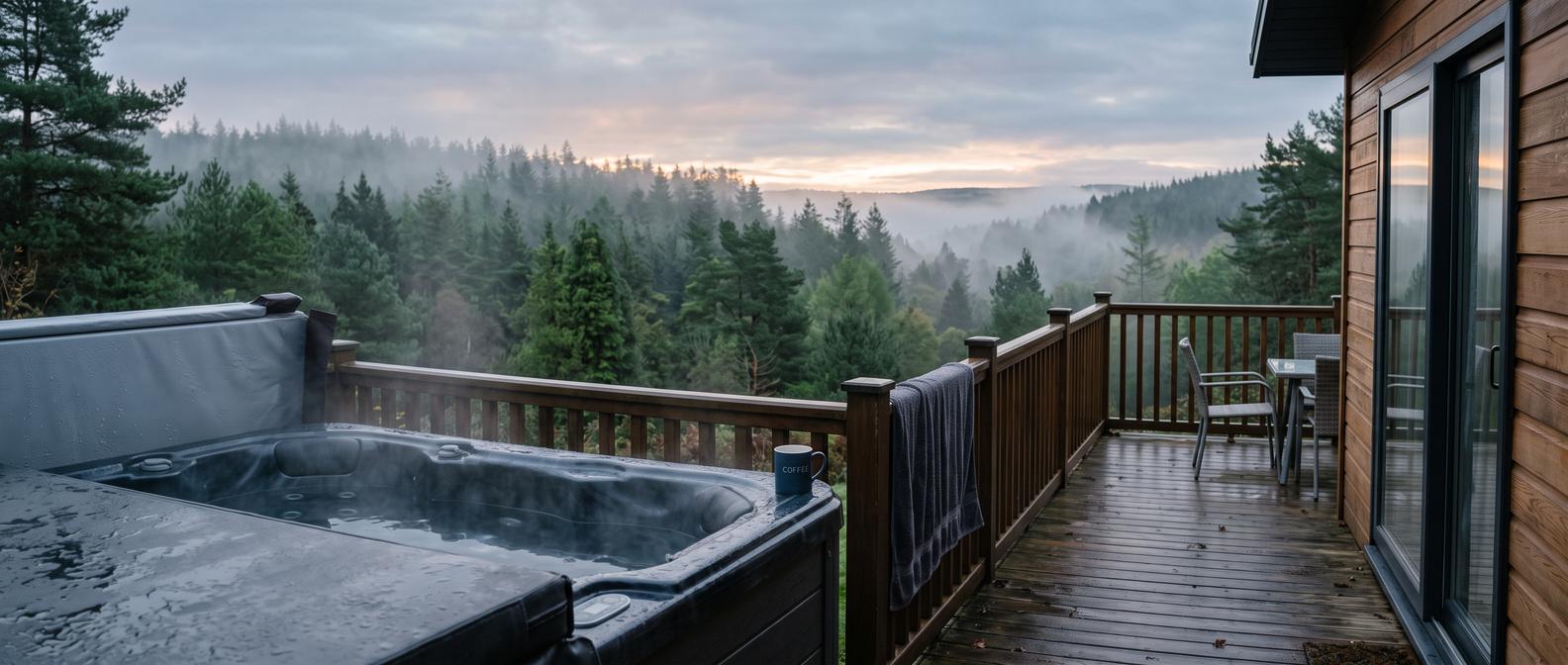
  • Hot Tub
2-Bedroom Hot Tub Lodge in BodiamPhotos & lodge info

Top Days Out Near 2-Bedroom Hot Tub Lodge in Bodiam

The best-known attractions within an easy drive of 2-Bedroom Hot Tub Lodge in Bodiam, with real driving times.

Moated castle 2 min drive · 1 miles

Bodiam Castle

Sat nav: TN32 5UA

A 14th-century moated castle in East Sussex with spiral staircases, battlements and a portcullis to explore.

  • Families
  • Dogs in the grounds
Read more

Bodiam Castle is a 14th-century moated castle near Robertsbridge in East Sussex. Sir Edward Dalyngrigge built it in 1385 with the permission of Richard II, ostensibly to defend the area against French invasion during the Hundred Years' War. It has no keep. Instead, the chambers were built around the outer walls and inner courts, with towers at the corners and the entrance, topped by battlements.

Inside, the interior is ruined, but you can still climb the spiral staircases, walk along the battlements and pass under the portcullis. The castle sits in an artificial watery landscape, and the grounds are open to explore. There's a shop, a tea-room overlooking the river and a second-hand bookshop by the river. The National Trust runs family trails and other events through the year.

Tip: You don't need to book in advance, but the car park uses the JustPark app, so download it and set up an account before you arrive. The towers are reached by steep spiral staircases.
Historic abbey and battlefield 12 min drive · 7 miles

Battle Abbey

Sat nav: TN33 0AD

Walk the actual field of the 1066 Battle of Hastings and explore the abbey ruins William the Conqueror founded.

  • Families
  • Couples
  • 2-3 hours
Read more

Battle Abbey, run by English Heritage as 1066 Battle of Hastings, Abbey and Battlefield, is the site where William the Conqueror's Normans met King Harold's English army. The abbey was founded by William soon after the conquest, said to be on the spot where Harold died. Start at the visitor centre, where interactive displays and a film tell the story of the battle, then pick up the audio tour and walk the battlefield, looking out for the dramatic wooden figures.

Afterwards you can explore the abbey ruins and climb to the gatehouse rooftop for panoramic views. An exhibition inside the gatehouse covers the abbey's history, and there's a walled garden and an ice house to investigate. There's a big café near the gatehouse and a children's playground inspired by the site's history, so it works well for families, and anyone with an interest in English history.

Tip: Head to the visitor centre first to get the story of the battle, then take the audio tour round the battlefield.

Historic garden 20 min drive · 10.7 miles

Sissinghurst Castle Garden

Sat nav: TN17 2AB

A world-renowned Kent garden created by Vita Sackville-West and Harold Nicolson, with its famous White Garden.

  • Couples
  • Dogs in the grounds
Read more

Sissinghurst Castle Garden was created by the writer Vita Sackville-West and her husband Harold Nicolson, who bought the run-down farmstead in 1930. It is among the most famous gardens in England and is Grade I listed. The design is a series of enclosed "garden rooms" linked by straight walks, and the White Garden is the best known of them. The plant collection is particularly strong on old garden roses.

Beyond the garden there is plenty of history. The estate has been occupied since the Middle Ages, and the Tower, built in the 1560s, is one of the surviving parts of a much larger courtyard house. The wider estate has lakes, a moat and ponds to explore, and there is a restaurant, coffee shop, shop and plant shop on site. Gardeners and anyone interested in the Sackville-West and Nicolson story will find most to enjoy.

Tip: Pushchairs aren't allowed in the main garden because of narrow paths, but baby carriers are fine. Dogs on leads can use the wider estate but not the formal garden. Check the National Trust page for opening times and any closures before you go.

Castle and garden 20 min drive · 11.8 miles

Scotney Castle

Sat nav: TN3 8JD

A romantic ruined moated castle in a sloping, wooded garden, with a Tudor Revival house above.

  • Couples
  • Dogs welcome
  • Half day
Read more

Scotney Castle is a National Trust property near Lamberhurst, set in a wooded valley. The star is the ruined medieval Old Castle, which sits on an island in a small lake. Sloping gardens run down to the water, with rhododendrons, azaleas and kalmia in spring, wisteria and roses in summer, and strong autumn colour. The garden is a Site of Special Scientific Interest.

At the top of the garden stands the house built to replace the Old Castle, designed by Anthony Salvin in an unusually restrained Tudor Revival style. Beyond the garden, the estate has parkland and woodland to walk through. The Quarry Garden holds the impression of a dinosaur's footprint, which children tend to enjoy hunting for. There is a tea-room in the courtyard, a shop and a plant shop. It suits garden lovers, couples, walkers and anyone who likes a good castle view.

Tip: The car park is small, so check the National Trust website for current parking booking rules before you set off.

Historic house 16 min drive · 10 miles

Bateman's

Sat nav: TN19 7DS

Step into Rudyard Kipling's Jacobean home, with its garden, working watermill and countryside walks.

  • Families
  • Couples
  • Dogs in the grounds
  • Half day
Read more

Bateman's is the 17th-century Sussex home of Rudyard Kipling, who lived here from 1902 until his death. The Grade I listed Jacobean house has been kept much as it was in his day, with his study, his Nobel Prize and his Rolls-Royce Phantom I among a large Kipling collection. Kipling created the garden himself, and the estate also has an 18th-century working watermill, Park Mill, on the River Dudwell.

It suits families as well as literary and history fans. Children can explore the natural play area, which has swings, climbing frames and a carved oak tree topped by an owl, and there are estate walks to stretch your legs. Afterwards, the Mulberry tea-room serves drinks, light lunches and cakes, and the shop sells gifts, plants and Kipling books.

Tip: The house has small rooms, so leave buggies in the hall or outside. Estate paths can be muddy, so bring wellies or walking boots.

Roman fort and castle 28 min drive · 17.8 miles

Pevensey Castle

Sat nav: BN24 5LG

A huge Roman fort where William the Conqueror landed in 1066, with Norman and Second World War history.

  • Families
Read more

Pevensey Castle began as a Roman fort around AD 290 and is the largest of the Saxon Shore forts. Its massive walls, more than 500 metres long, still stand almost to their full height. In 1066 William the Conqueror landed here to begin his invasion of England, and the Normans built a stone keep and fortress inside the Roman defences.

You can walk around the walls and towers, then see the later chapters of the story. Machine-gun posts were built into the walls during the Second World War and can still be seen today. Displays cover sieges, royal prisoners and how soldiers lived alongside local people, and there is a recreated 1940 commander's office. Children can try the Pevensey Castle Code, look into a dungeon and explore a medieval basement room.

Tip: Book advance tickets online to save money. Battle Abbey, the 1066 battlefield, is about 9 miles away.

Historic castle 27 min drive · 15.5 miles

Herstmonceux Castle

Sat nav: BN27 1RN

One of England's oldest significant brick buildings, a 15th-century castle with listed gardens and an observatory past.

  • Couples
Read more

Herstmonceux Castle is a brick-built castle in East Sussex, dating from 1441. It is one of the oldest significant brick buildings still standing in England, built with bricks made from local clay by builders from Flanders. Its story runs from a ruined shell, left after the interior was demolished in 1776-77, to a major restoration in the early twentieth century. Most of the interiors you see date from that restoration and include architectural antiques from England and France.

The parks and gardens are Grade II* listed, and the estate also has a Grade II listed walled garden to the north of the castle. The grounds were once home to the Royal Greenwich Observatory, and the domes of its Equatorial Group of telescopes are still part of the estate. It suits anyone who enjoys castles, architecture, gardens and the history of astronomy.

Coastal fort 19 min drive · 12.6 miles

Camber Castle

Sat nav: TN36 4AZ

A Henry VIII artillery fort reached on a one-mile countryside walk from Rye.

  • Dogs welcome
Read more

Camber Castle is an unusually unaltered artillery fort, built by Henry VIII to guard the port of Rye. It sits between Rye and Winchelsea, and its concentric design has a central keep surrounded by round bastions. The coastline has since receded, leaving the fort well inland. J. M. W. Turner once painted it, and it is a Grade I listed building.

There is no vehicular access, so the visit is a one-mile walk on footpaths from Rye, with the outside of the castle to explore. You can stretch it into a circular walk on the footpaths of Rye Harbour Nature Reserve, taking in a martello tower, WWII pillboxes and old and new sea defences. Birds can be watched from hides along the way. It suits history fans and walkers who like a bit of wildlife on the side.

Tip: The nearest car park is on Winchelsea Road in Rye, about a mile from the castle, so wear walking shoes.

Drive times are typical times by car with no traffic. Check opening times and book tickets on each attraction's own website before you go.

2-Bedroom Hot Tub Lodge in Bodiam
Check Availability